
Abstract
This article argues that marriage among the Bakiga of south western Uganda functioned not merely as an institution governing family formation but as a central mechanism through which historical consciousness, social memory and collective identity were reproduced across generations. Existing scholarship has typically interpreted African marriage through the analytical frameworks of kinship, descent, inheritance and alliance. While these perspectives remain indispensable, they do not fully explain the deeper significance of marriage within Bakiga society. Drawing upon anthropological scholarship, oral traditions and historical literature on Kigezi, the article contends that marriage constituted a form of social remembering through which genealogical knowledge, ancestral continuity, moral obligations and communal belonging were transmitted between generations. Through practices of clan exogamy, bridewealth, ritual instruction, fertility and ceremonial performance, marriage linked the living to the dead and the present to the future. In this sense, marriage was not simply a domestic institution but one of the principal ways through which Bakiga society reproduced itself historically.
Keywords: Bakiga, marriage, kinship, memory, historical consciousness, oral tradition, Kigezi, Uganda, ancestry, social reproduction.
Introduction
The study of marriage occupies a central place within African historiography and anthropology. From the pioneering work of Evans-Pritchard (1940), Fortes (1969) and Goody (1976), scholars have long recognised that marriage cannot be reduced to a private agreement between individuals. Rather, it constitutes one of the principal means through which societies organise descent, inheritance, authority and social belonging. Yet such analyses, valuable as they are, often fail to address a broader question. What role does marriage play in the production and preservation of historical consciousness?
This question is particularly important in relation to the Bakiga of south western Uganda. For generations, marriage occupied a central position within Bakiga social, moral and intellectual life. It organised kinship, structured relations between lineages, regulated inheritance and provided the framework through which families reproduced themselves biologically and socially. Yet its significance extended considerably beyond these functions. Marriage was also a mechanism through which society transmitted memory, preserved genealogical knowledge and sustained continuity between ancestors, the living and future generations.
The argument advanced here is that marriage among the Bakiga should be understood not simply as a social institution but as an institution of historical reproduction. Through marriage, communities remembered their past, reaffirmed their place within wider genealogical networks and projected themselves into the future. The familiar proverb omuntu tarongora wenka (“one does not marry alone”) encapsulates this worldview. Marriage was never conceived as an exclusively personal undertaking. It represented the convergence of lineages, memories, obligations and histories accumulated over generations.
This article therefore seeks to move beyond conventional ethnographic descriptions of marriage to examine its place within wider structures of memory and historical consciousness. It argues that marriage functioned as one of the principal institutions through which Bakiga society reproduced itself through time.
Marriage and the Reproduction of Historical Consciousness
The tendency to locate historical consciousness within written chronicles, archival repositories and formal historiographical traditions reflects a conception of history profoundly shaped by literacy. Such assumptions have often obscured alternative modes through which societies preserve knowledge of the past and transmit it across generations. A substantial body of scholarship has now demonstrated that historical consciousness need not depend upon written documentation. Rather, it may be embedded within social institutions, ritual obligations, systems of kinship and forms of collective memory that continually connect present experience to inherited understandings of the past (Vansina, 1985; Halbwachs, 1992; Assmann, 2011).
Among the Bakiga, marriage occupied a singular position within this architecture of historical reproduction. Its importance cannot be explained solely through reference to family formation, biological reproduction or the regulation of descent. Such functions were undoubtedly significant, yet they do not adequately capture the deeper intellectual work performed by the institution. Marriage was one of the principal means through which historical knowledge remained socially operative. It compelled individuals to locate themselves within lineages that preceded them, within obligations inherited from earlier generations and within futures that extended beyond their own lifetimes.
The institution therefore served as a critical mediating structure between memory and social practice. Marriage negotiations did not begin with the preferences of the prospective couple alone. They required the reconstruction of genealogical histories, the identification of clan affiliations and the verification of ancestral relationships. Every proposed union generated inquiries into descent and belonging. Families were required to ask who they were, where they came from and how their histories intersected with those of others. Historical knowledge was consequently not confined to acts of commemoration. It became indispensable to the conduct of ordinary social life.
What is particularly striking is the manner in which these processes transformed memory into a practical social resource. In many contemporary societies genealogy frequently survives as a matter of personal curiosity or antiquarian interest. Among the Bakiga, however, genealogical knowledge carried immediate social consequences. The legitimacy of marriage depended upon it. Questions concerning clan identity, ancestral origin and kinship relations were not peripheral matters. They shaped decisions with profound implications for families, inheritance, social status and communal legitimacy.
Historical consciousness therefore functioned less as a reflective awareness of the past than as a field of social knowledge continually activated within the present. The authority of ancestry did not derive from nostalgia or symbolic reverence alone. It derived from the fact that ancestral relationships continued to inform contemporary social action. Through marriage, the past retained normative force. It remained capable of shaping present choices because institutions repeatedly required its interpretation.
The result was a distinctive relationship between history and society. Historical knowledge survived not because it was preserved within archives external to everyday life but because it was embedded within the institutional processes through which society reproduced itself. Marriage did not simply reflect historical consciousness; it actively generated and sustained it. Through the continual recollection of genealogies, the reaffirmation of lineage identities and the renewal of ancestral obligations, marriage transformed memory from an act of recollection into a living social practice.
At its deepest level, the institution reveals a conception of history fundamentally different from that implied by many modern understandings of the past. The past was not regarded as a completed domain separated from contemporary existence. It remained an active presence within the organisation of social life. Ancestors continued to matter because social relations continued to be structured through their legacy. Marriage therefore became one of the principal mechanisms through which society reproduced not merely persons and families but the historical consciousness upon which collective identity itself depended.
The Genealogical Imagination and Clan Exogamy
The relationship between marriage and historical consciousness becomes particularly visible in the institution of clan exogamy. To interpret exogamy merely as a prohibition against incest is to overlook its wider intellectual significance within Bakiga social thought. While biological considerations undoubtedly mattered, the institution was rooted within a much broader concern with ancestry, historical continuity and the preservation of genealogical knowledge.
Among the Bakiga, the clan was not simply a category of social organisation. It represented a historical community constituted through shared descent and collective memory. Membership of an ekika signified participation in a lineage whose origins were located within a common ancestral past. Clan identity therefore carried moral, historical and social weight simultaneously. It located individuals within narratives extending far beyond the duration of their own lives.
The prohibition of marriage between members of the same clan consequently rested upon assumptions that were as historical as they were social. Before marriage negotiations proceeded, families frequently undertook detailed inquiries into ancestral relationships. Elders reconstructed genealogies, recalled lineages and examined connections extending across multiple generations. Such processes constituted far more than ritual preliminaries. They involved sophisticated acts of historical reasoning through which communities interpreted, verified and mobilised inherited knowledge.
The intellectual importance of these practices has often been underestimated. They required the sustained preservation of genealogical memory over long periods of time. Historical knowledge could not remain dormant. It had to be continuously cultivated, transmitted and recalled. The authority of elders derived in no small measure from their capacity to navigate these historical landscapes. Their expertise rested upon accumulated knowledge of lineages, migrations, affinities and ancestral relationships. They functioned not merely as senior relatives but as custodians of historical consciousness.
Genealogy therefore occupied a position analogous to that performed by archives in literate societies. It preserved records of belonging, authenticated social identities and provided a framework through which relationships could be understood and regulated. Yet unlike written archives, genealogical knowledge remained inseparable from human memory and social practice. Its preservation depended upon continual use. Each marriage required lineages to revisit their histories and reaffirm their understanding of ancestral connections.
Exogamy thus served a dual purpose. On the surface, it regulated permissible marriage relationships. At a deeper level, it ensured the continual reproduction of historical knowledge. The institution compelled society to remember. Historical consciousness became embedded within the very process through which kinship relationships were established and maintained.
Through this mechanism, the past acquired enduring social relevance. Communities could not move forward without first engaging with inherited histories. Marriage required people to know who they were because social legitimacy depended upon that knowledge. In this sense, exogamy transformed ancestry from a matter of historical remembrance into a principle of social organisation. The institution preserved not only lineages but also the historical imagination through which those lineages understood themselves.
Marriage as the Creation of Social Worlds
One of the most enduring limitations of colonial and early anthropological representations of African marriage was their tendency to conceptualise the institution through the language of transfer. Marriage frequently appeared as a transaction whereby women moved from one household to another and rights over labour, sexuality and reproduction were reassigned. Such interpretations reveal more about the conceptual assumptions of colonial observers than about the social realities they purported to describe.
Among the Bakiga, marriage was not primarily concerned with transfer but with incorporation. Its significance lay not in the relocation of individuals but in the construction of new social relationships capable of transforming the wider architecture of community life. Marriage expanded the moral universe within which persons lived. It generated affiliations where none previously existed and created obligations that extended far beyond the immediate participants in the union.
The Rukiga expression Omukazi n’omuryango gwe (“a woman arrives with her family”) offers a particularly revealing insight into this understanding. Embedded within the proverb is a conception of personhood radically different from modern individualism. Individuals were not imagined as autonomous social units entering relationships of their own choosing. Rather, they existed within dense networks of kinship, obligation and memory that accompanied them wherever they went. A bride entered marriage carrying with her not merely personal qualities but an entire constellation of relationships, histories and social commitments.
Marriage therefore generated what might properly be described as new social worlds. Families previously connected only by geographical proximity were incorporated into enduring networks of reciprocity. Affinal relationships acquired significance comparable to relations of descent. Obligations emerged that would shape interactions for decades and, in many cases, across successive generations. The institution extended the reach of kinship beyond biological ties and thereby enlarged the sphere of social cooperation.
Its significance was particularly pronounced within a society characterised by strong clan identities and dispersed patterns of settlement. Marriage enabled relationships to proliferate across social boundaries. It transformed strangers into relatives and converted unfamiliar households into sites of mutual obligation. Through the accumulation of such relationships, wider patterns of social cohesion emerged. Community was not simply inherited. It was actively constructed through the alliances created by marriage.
The historical dimensions of this process are equally important. Marriage did not establish temporary connections confined to the present generation. It generated relationships expected to endure through descendants. Children born of the union embodied these connections and ensured their continuation. Consequently, marriage linked the social reproduction of families to the historical reproduction of community itself.
The institution was therefore neither a private arrangement nor a merely domestic concern. It served as one of the principal mechanisms through which society expanded, integrated and renewed itself. Marriage made possible the continual production of social worlds whose significance extended beyond any individual household and into the broader historical life of the community.
Bridewealth and the Moral Economy of Recognition
Few institutions within African social history have been subjected to more persistent misrepresentation than bridewealth. Colonial administrators and early observers commonly interpreted bridewealth through the language of economic transaction, depicting it as a form of purchase in which women became objects of exchange between men and families. Such interpretations, while influential, rested upon conceptual categories that were fundamentally inadequate to the social realities they purported to explain.
Among the Bakiga, bridewealth was embedded within a far more complex moral and relational economy. The exchange of cattle, goats, agricultural produce, beer and other valuables cannot be understood through the logic of market exchange because the purpose of the transaction was not acquisition. Rather, it was the public recognition of relationships and obligations whose significance extended beyond material value.
The oft-repeated expression Omukazi taragurwa (“a woman is not bought”) should be treated as a profound statement of social philosophy rather than a simple cultural defence. It articulates an important conceptual distinction between exchange and commodification. The transfer of wealth did not transform persons into property. On the contrary, it acknowledged the social labour, moral investment and intergenerational care through which a daughter had been raised and incorporated into community life.
Bridewealth therefore functioned as a mechanism of recognition. It publicly affirmed the legitimacy of the marriage and validated the obligations that accompanied it. Equally important, it established a framework within which future relationships between lineages could be understood. Through bridewealth, families entered into a durable moral relationship that neither side could easily disregard. The exchange signalled commitment, accountability and mutual recognition.
Its significance cannot be reduced to economics because its effects were fundamentally social and moral. Bridewealth created enduring ties between families, clarified responsibilities relating to children and inheritance, and embedded the marriage within a wider network of reciprocal obligations. The transaction derived its meaning not from the value of the items exchanged but from the relationships those exchanges inaugurated and sustained.
- Indeed, to focus exclusively upon the material dimensions of bridewealth is to miss its most important function. Bridewealth transformed marriage from a private arrangement into a publicly recognised covenant. The institution gave social form to trust, obligation and interdependence. It ensured that the marriage belonged not only to the couple but also to the wider moral community from which both families emerged.
In this respect, bridewealth may be understood as one of the principal mechanisms through which social continuity was institutionalised. It created relationships endowed with historical depth and moral durability. What was being exchanged was not merely property but recognition, legitimacy and commitment. Through bridewealth, marriage was incorporated into a wider moral economy linking families, lineages and generations across time. Such exchanges therefore belonged not primarily to the realm of economics but to the realm of social ethics, where the enduring concern was not ownership but the creation of relationships capable of sustaining community across successive generations.
Marriage, Landscape and the Ecology of Highland Life
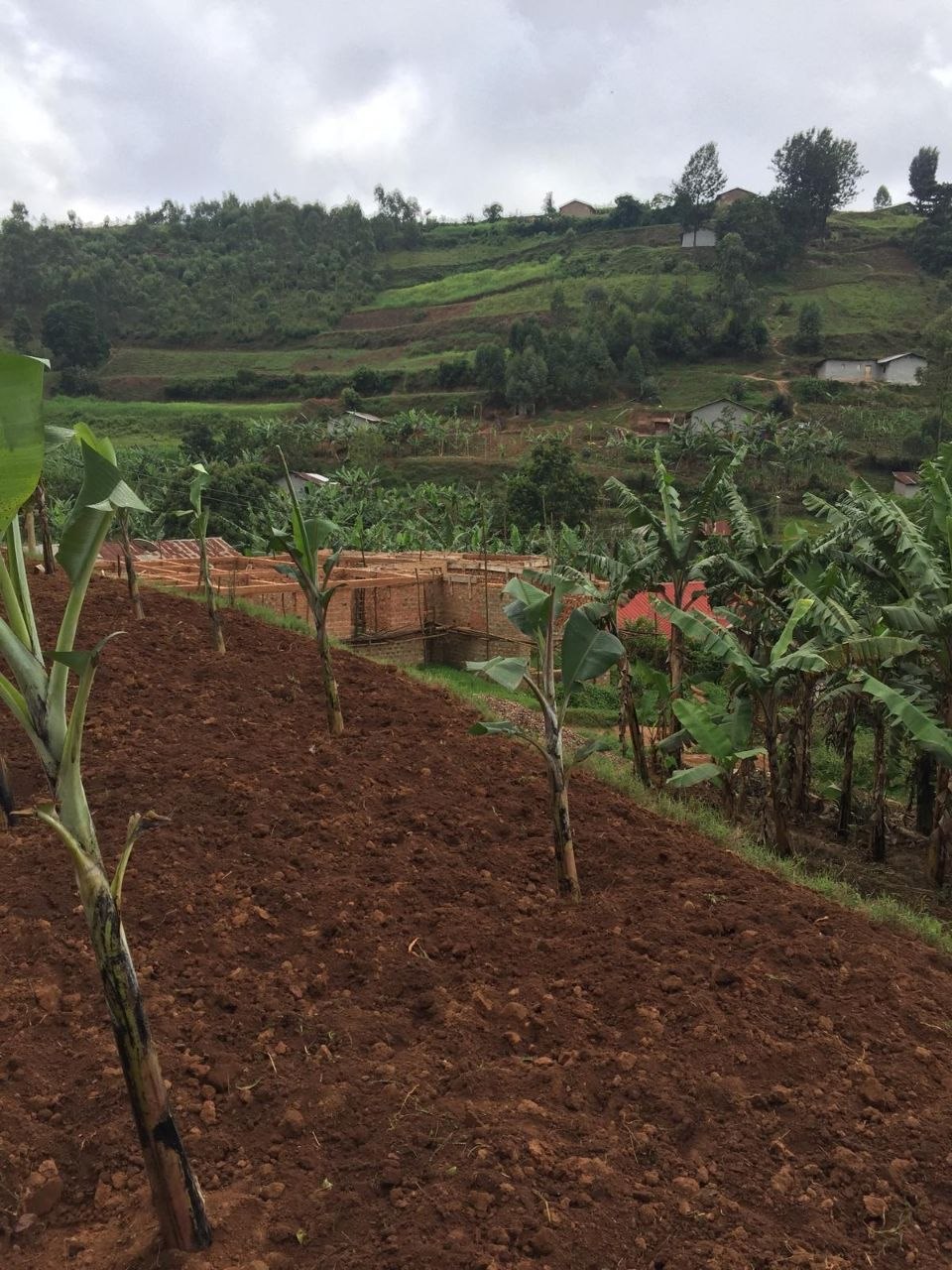
Marriage among the Bakiga cannot be understood apart from the environmental history of Kigezi itself. The institution evolved within a distinctive highland landscape whose physical characteristics profoundly shaped patterns of settlement, kinship, production and social organisation. To analyse marriage without reference to this ecological context is therefore to separate social institutions from the material conditions that gave rise to them. The history of marriage in Kigezi is, in important respects, also a history of how communities adapted to, organised and reproduced life within a demanding mountain environment.
The landscape of Kigezi has long occupied a distinctive position within the Great Lakes region. Characterised by steep hills, deeply incised valleys, fragile soils and exceptionally high population densities, the region presented challenges very different from those encountered in many neighbouring societies. As Shane Doyle has shown, by the late nineteenth and early twentieth centuries the Bakiga inhabited one of the most densely settled rural regions in Africa, producing intense pressure upon land, resources and agricultural production (Doyle, 2006). Such demographic conditions transformed questions of family formation from private matters into issues of wider social and economic significance. Marriage became inseparable from the organisation of labour, access to land and the long term sustainability of household production.
Within this context, the household assumed a significance extending far beyond domestic life. It functioned simultaneously as an economic enterprise, a reproductive unit, a centre of knowledge transmission and a mechanism for environmental adaptation. Family survival depended not merely upon the possession of land but upon the capacity to cultivate it effectively. The steep hillsides of Kigezi demanded extraordinary levels of labour investment. Terracing, soil conservation, crop rotation and the cultivation of multiple ecological zones required a highly coordinated system of work in which family members occupied complementary roles. Marriage therefore became one of the principal institutions through which labour was mobilised and organised.
The economic significance of marriage should not, however, be reduced to utilitarian concerns. To suggest that people married merely to secure labour would be as misleading as claiming that they married solely for companionship. Rather, marriage represented the social framework within which productive life became possible. The household brought together individuals who collectively managed land, cultivated crops, cared for livestock and responded to the uncertainties of agricultural existence. In this sense, marriage was embedded within a broader ecology of survival in which social cooperation and environmental adaptation were inseparable.
This relationship between marriage and environment becomes especially apparent when one considers the transmission of agricultural knowledge. The cultivation of Kigezi’s hills required extensive local expertise accumulated over generations. Knowledge concerning soil quality, seasonal cycles, terracing techniques, seed selection, livestock management and environmental risk did not exist in abstract form. It was embedded within families and transmitted through everyday practice. Marriage provided the institutional setting within which such knowledge could be reproduced. Children learned not only how to cultivate the land but also how to inhabit a particular ecological world. Techniques developed across generations became part of family history and communal memory.
The reproduction of households therefore involved more than biological continuity. It entailed the reproduction of practical knowledge essential to the maintenance of life in a demanding landscape. Marriage ensured that environmental expertise remained embedded within social relationships. Through parents, grandparents and extended kin networks, younger generations inherited not merely land but a sophisticated understanding of how to sustain it. Ecological knowledge moved through the same channels as kinship, memory and social identity.
Such observations invite a broader reconsideration of the relationship between landscape and social institutions. Historians frequently treat the environment as a backdrop against which human action unfolds. The Bakiga case suggests a more dynamic relationship. The landscape itself shaped social organisation, influencing patterns of settlement, inheritance and family formation. Marriage was not simply practised within the hills of Kigezi; it was partly produced by them. The ecological realities of the region contributed to the emergence of social arrangements capable of sustaining life under conditions of demographic pressure and limited agricultural resources.
At a deeper level, marriage linked the continuity of families to the continuity of the landscape itself. The maintenance of terraced hillsides, cultivated fields and inherited homesteads depended upon the successful reproduction of households across generations. Family continuity ensured agricultural continuity. The disappearance of lineages could result in the fragmentation of land, the loss of inherited knowledge and the weakening of social networks through which productive life was organised. Marriage therefore carried implications extending far beyond individual families. It contributed directly to the preservation of a particular ecological order shaped through centuries of human labour and environmental adaptation.
This relationship between kinship and landscape also illuminates an often overlooked dimension of Bakiga historical consciousness. Land was not simply an economic resource. It was a repository of memory. Hills, valleys, homesteads and cultivated fields were associated with particular lineages, ancestral histories and family narratives. Through marriage, individuals acquired access not only to territories but also to the historical worlds embedded within them. The landscape itself became intelligible through kinship. To know where one belonged required knowledge of ancestry, inheritance and social relationships extending across generations.
From this perspective, marriage emerges as far more than an institution regulating intimacy, reproduction or domestic life. It constituted one of the principal mechanisms through which ecological knowledge, territorial belonging and historical memory were continuously renewed. It linked the reproduction of people to the reproduction of place. Through marriage, the Bakiga transmitted not only names and genealogies but also the environmental knowledge and social practices that enabled communities to endure within one of Africa’s most remarkable highland landscapes. The institution therefore occupied a pivotal position at the intersection of kinship, memory, ecology and history, ensuring that both society and landscape remained mutually sustaining across generations.
Fertility and the Temporal Imagination of the Bakiga
The significance of fertility within Bakiga society cannot be understood through demographic or economic explanations alone. Although children undoubtedly contributed to household labour, agricultural production and security in old age, to reduce fertility to such functions is to overlook its deeper cosmological and historical significance. Among the Bakiga, the desire for children was inseparable from broader conceptions of continuity, memory and belonging. Fertility was fundamentally concerned with the capacity of a lineage to reproduce itself through time.
At the heart of Bakiga social thought lay a particular understanding of human existence as inherently intergenerational. The individual was never conceived as an isolated social actor whose life began at birth and ended with death. Rather, personhood emerged within a continuum linking ancestors, the living and future descendants. In this respect, Bakiga understandings of fertility resonate strongly with John Mbiti’s observation that many African societies perceive human existence through an ongoing dialogue between the living, the living dead and those yet to be born (Mbiti, 1990). Marriage and childbearing were therefore situated within a wider moral framework concerned with continuity rather than merely reproduction.
To remain without descendants was not simply a private misfortune. It represented a potential interruption in the transmission of lineage, memory and social identity. Children ensured that names, genealogies and clan histories survived beyond the lifespan of any individual. Through descendants, ancestral memory remained active within the social world. Fertility was therefore not merely biological. It was historical.
This historical dimension becomes particularly evident when one considers the importance attached to genealogy within Bakiga society. Lineages were not abstract kinship structures. They constituted living historical communities whose continuity depended upon successive generations. Every birth extended a lineage into the future while simultaneously preserving connections to the past. The child occupied a position between memory and expectation, inheriting obligations to ancestors while carrying responsibility for descendants yet unborn. Fertility thus linked temporal horizons that modern thought often separates. Through children, the past remained present and the future became conceivable.
The value attached to fertility also reflected wider concerns regarding permanence in a world marked by mortality and uncertainty. Human life was understood as transient, yet lineages possessed the potential for continuity across centuries. Marriage offered a means through which individuals could participate in something enduring beyond their own lifespan. The desire for descendants therefore reflected not simply concern for family survival but participation in a collective project of historical preservation. In a profound sense, children represented the social victory of continuity over mortality.
Oral traditions throughout Kigezi frequently associate children with remembrance. Elderly men and women often expressed the view that descendants ensured that one would not disappear entirely from the memory of the community. Such beliefs should not be interpreted narrowly as concerns with personal legacy. Rather, they reveal a broader social philosophy in which human beings achieved continuity through participation in lineage and community. The birth of a child confirmed that ancestral histories would continue to be narrated, family lands would remain connected to particular lineages and clan identities would persist across generations.
Fertility was equally important to the moral economy of kinship. The arrival of children transformed a marriage from a contractual relationship between families into a living embodiment of continuity. Descendants materialised alliances previously established through marriage negotiations and bridewealth exchanges. Through children, relations between lineages acquired permanence. The child therefore functioned not merely as offspring but as the social and historical fulfilment of marriage itself.
Seen from this perspective, fertility occupied a central place in what may be termed the temporal imagination of the Bakiga. Marriage was not principally oriented towards the present. It was directed simultaneously towards past and future. Ancestors were remembered through descendants, while descendants inherited responsibilities towards ancestors they had never known. Fertility provided the crucial mechanism through which this intergenerational chain was maintained.
The reproduction secured through marriage was therefore not simply the reproduction of population. It was the reproduction of historical consciousness, kinship memory and social continuity. Through children, society renewed itself. Through descendants, ancestors remained socially present. Through fertility, the Bakiga transformed biological reproduction into a form of historical persistence. The birth of a child was consequently not only a family event but a historical event, marking the continuation of a lineage, the preservation of memory and the extension of a community into time itself.
This, perhaps more than any other feature of Bakiga marriage, reveals its deeper significance. What marriage ultimately reproduced was not merely families but the historical existence of society.
Marriage Songs and the Oral Intellectual Traditions of the Bakiga
Among the Bakiga, some of the most sophisticated reflections on marriage, kinship, authority and social obligation were not preserved in written texts but in oral performance. Marriage songs occupied a central position within this intellectual tradition. Far from constituting mere embellishments to ceremonial occasions, they functioned as repositories of social knowledge through which communities interpreted experience, transmitted cultural values and reflected upon the tensions and contradictions of social life.
To treat marriage songs simply as cultural artefacts or forms of entertainment is therefore to misunderstand their historical and intellectual significance. They belong to a wider corpus of oral knowledge through which the Bakiga preserved collective memory and engaged in critical reflection upon the organisation of society. Like proverbs, clan histories and oral narratives, marriage songs performed an educational function, but they also served as vehicles of interpretation. They provided communities with a language through which to think about relationships, gender, authority, work, fertility, morality and belonging.
In societies where much historical knowledge circulated through oral transmission, performance itself became a mode of intellectual production. Marriage ceremonies created spaces within which social values could be publicly articulated, examined and contested. Songs performed during introductions, negotiations, wedding celebrations and post marriage rituals often contained carefully constructed moral commentaries directed at brides, grooms, parents, in laws and the wider community. Through praise, satire, lamentation and humour, singers evaluated conduct, commended virtue and criticised behaviour deemed inconsistent with communal expectations.
Particularly noteworthy is the extent to which marriage songs preserved reflections on power and social relations. While some compositions reinforced prevailing expectations regarding marriage, fertility, domestic responsibility and family life, others reveal a far more complex social conversation. Recent scholarship by Rwomushana (2024) demonstrates that marriage songs frequently became sites of negotiation in which women commented upon unequal power relations, questioned social expectations and articulated alternative understandings of dignity and authority. The songs therefore provide important evidence that Bakiga society was never characterised by complete consensus. Rather, it contained ongoing debates concerning gender, obligation and social justice.
This complexity challenges persistent tendencies within earlier anthropological writing to portray African traditions as static, consensual and unchanging. Marriage songs reveal instead a dynamic intellectual culture characterised by reflection, adaptation and internal critique. Through poetic expression, communities engaged in continuous dialogue about the nature of social life and the moral foundations upon which it should rest.
The historical significance of these songs extends even further. Embedded within them are traces of earlier social worlds, memories of changing family structures, reflections on economic transformations and evolving understandings of gender relations. Like oral histories, they preserve fragments of collective experience that frequently remain absent from written archives. They provide insight not only into what people believed but also into what they feared, desired, contested and imagined. For the historian, they therefore constitute invaluable sources through which the emotional and moral dimensions of social life may be reconstructed.
Marriage songs also illuminate a broader feature of Bakiga society: the intimate relationship between memory and performance. The preservation of knowledge did not depend solely upon recollection. It depended upon repeated enactment. Songs ensured that important social values were not simply remembered but continuously reintroduced to each generation. Young people learned about marriage not through abstract instruction alone but through participation in ceremonies where communal wisdom was performed, interpreted and embodied.
In this sense, marriage songs functioned as living archives. They preserved a cumulative body of social thought while simultaneously allowing each generation to reinterpret inherited traditions in light of changing circumstances. Their significance lies precisely in this capacity to bring memory into conversation with the present. Through song, the past remained audible within contemporary life.
From this perspective, marriage ceremonies emerge not merely as family celebrations but as arenas of intellectual exchange. They were occasions during which society reflected upon itself, revisited its assumptions and reaffirmed, challenged or renegotiated its understanding of the moral order. The songs associated with these ceremonies should therefore be recognised as part of the oral intellectual heritage of the Bakiga and as important sources for any serious enquiry into the history of social thought in the Great Lakes region.
Rather than treating these performances as peripheral cultural expressions, they ought to be understood as a sophisticated archive of ideas through which generations of Bakiga articulated their understandings of personhood, kinship, authority, morality and social continuity. Within them resides a substantial body of historical and philosophical reflection, one that deserves far greater attention within African intellectual history than it has thus far received.
Colonialism, Christianity and the Reconfiguration of Marriage in Kigezi
Any discussion of marriage among the Bakiga that remains confined to precolonial institutions risks presenting a static and ultimately misleading picture of social life. Marriage, like every major social institution, has been shaped by historical forces, political interventions and intellectual transformations. The twentieth century therefore represents a critical period in the history of Bakiga marriage, not because customary institutions disappeared under colonial rule, but because they became sites of contestation, adaptation and reinterpretation.
The arrival of colonial administration in Kigezi at the beginning of the twentieth century marked the incorporation of Bakiga society into new political, legal and religious structures that profoundly altered existing patterns of authority. Colonial officials, missionaries, teachers and administrators did not merely introduce new institutions. They brought with them alternative conceptions of family, property, sexuality, inheritance and social order. Marriage became one of the principal arenas through which these competing visions of society encountered one another.
Missionary Christianity occupied a particularly influential position within this process. Catholic and Protestant missions sought to replace what they regarded as “customary” forms of marriage with a Christian model grounded in sacramental union, monogamy and ecclesiastical authority. Marriage was increasingly presented not as a relationship between lineages but as an exclusive covenant between two individuals before God. The centre of gravity shifted from extended kinship networks towards the conjugal couple. Practices such as bridewealth, which had long functioned as mechanisms for establishing durable relations between families, were often viewed with suspicion by missionary authorities, who interpreted them through European assumptions concerning commerce, morality and domestic life.
Yet such interventions rarely produced the straightforward cultural transformations imagined by either missionaries or colonial administrators. Rather than abandoning indigenous understandings of marriage, Bakiga communities frequently absorbed, reformulated and domesticated new religious ideas within existing cultural frameworks. Christian marriage was seldom accepted as a complete replacement for customary marriage because it could not entirely fulfil the social functions that customary institutions had historically performed. A church ceremony might sanctify a union before God, but it could not by itself establish relationships between clans, negotiate obligations between lineages, legitimise claims concerning inheritance or reproduce the intricate networks of reciprocity through which Bakiga society had long been organised.
The encounter between Christianity and customary marriage thus generated neither cultural continuity nor cultural rupture. Instead, it produced a complex process of institutional layering in which older and newer forms of authority coexisted, overlapped and occasionally competed. Marriage became simultaneously customary, religious and legal. The same couple might undergo clan negotiations, participate in bridewealth exchanges, receive ecclesiastical blessing and subsequently register their marriage under civil law. Rather than viewing these developments as evidence of cultural inconsistency, they are perhaps better understood as illustrations of how societies negotiate historical change while preserving institutional continuity.
Colonial legal interventions introduced further complexities. Customary marriage increasingly became subject to administrative regulation, judicial scrutiny and legal classification. Practices that had historically derived their legitimacy from communal recognition and social consensus were now interpreted through legal categories imposed by the colonial state. Questions of marriage, divorce, succession and legitimacy gradually became matters not only of kinship authority but also of bureaucratic governance. The state entered domains of life that had previously been regulated largely by families, clans and community elders.
Yet even here the transformative power of colonial institutions should not be exaggerated. Colonial law often possessed greater formal authority than practical influence. In everyday life, many communities continued to rely upon customary principles when resolving disputes concerning marriage and family relations. The result was the emergence of legal pluralism in which state law, customary practice and religious authority coexisted within the same social landscape. Marriage therefore became one of the principal sites through which different systems of normativity encountered and negotiated one another.
The consequences of these historical transformations extended beyond law and religion. Labour migration, formal education, monetisation and urbanisation all altered inherited assumptions concerning marriage and family life. Young men increasingly acquired economic independence outside traditional kinship structures. Educational opportunities exposed younger generations to alternative understandings of gender, authority and personal autonomy. Economic change weakened certain forms of dependence upon lineage institutions while simultaneously creating new forms of social mobility. Marriage increasingly came to involve considerations shaped by schooling, employment and geographical mobility alongside older concerns regarding lineage, ancestry and social reputation.
To describe these developments simply as modernisation would, however, be inadequate. Such language implies a movement away from tradition towards an entirely different social order. The historical evidence suggests something considerably more complex. What occurred in Kigezi was not the abandonment of tradition but its continual reconstruction under changing historical circumstances. The meanings attached to bridewealth, clan authority, marriage negotiations and family obligations evolved, yet these institutions retained remarkable resilience because they continued to perform functions that neither the colonial state nor missionary Christianity could easily replace.
Recent scholarship by Bagumisiriza (2024) illustrates this remarkable institutional continuity. Contemporary Bakiga marriages frequently combine introduction ceremonies, bridewealth negotiations, church weddings and civil registration. Far from representing a fragmented or transitional social order, such arrangements reveal the capacity of cultural institutions to absorb external influences while preserving their underlying social logic. What survives is not an unchanged tradition but a tradition continually reinterpreting itself in response to new historical conditions.
This process of adaptation reveals something important about the nature of culture itself. Cultural continuity rarely depends upon resistance to change. More often, continuity is achieved through selective incorporation, reinterpretation and renewal. Bakiga marriage endured not because it remained untouched by colonialism, Christianity or modernity, but because it demonstrated an extraordinary capacity to accommodate them without relinquishing its deeper social purposes. The institution continued to organise kinship, sustain memory, regulate belonging and connect generations even as its outward forms evolved.
The history of marriage in Kigezi therefore challenges simplistic oppositions between tradition and modernity. The lived reality was neither the triumph of one nor the disappearance of the other. Rather, it was the gradual emergence of new social forms forged through dialogue between inherited institutions and changing historical circumstances. Marriage remained significant because it continued to provide what modern bureaucratic systems, legal frameworks and religious institutions could not fully supply: a durable language of belonging through which individuals understood their place within families, lineages and histories extending beyond the boundaries of their own lives.
Conclusion
Marriage among the Bakiga cannot adequately be understood through the conventional analytical vocabulary of family formation, reproduction or domestic organisation alone. To interpret it solely as a mechanism for regulating sexual relations, inheritance or household formation is to overlook its deeper historical significance. As this article has argued, marriage occupied a far more expansive role within Bakiga society. It constituted one of the principal institutions through which historical consciousness was reproduced, genealogical knowledge preserved and communal continuity sustained across generations.
The institution connected individuals to temporal horizons extending far beyond the limits of their own lives. Through the practices of clan exogamy, genealogical verification, bridewealth, fertility, ritual instruction and ceremonial performance, marriage situated persons within a wider moral and historical landscape linking ancestors, the living and future descendants. The significance of marriage therefore lay not merely in the creation of families but in the reproduction of society itself. Through marriage, lineage became durable, memory became social and history acquired institutional form.
Such observations invite a reconsideration of how historians approach African social institutions more broadly. Much of the earlier literature on kinship and marriage was primarily concerned with questions of social structure, descent and alliance. While these concerns remain important, they do not fully capture the ways in which institutions function as repositories of historical knowledge. Among the Bakiga, marriage operated not simply as an instrument of social organisation but as an archive of collective memory. It preserved genealogical knowledge, transmitted cultural values and ensured that historical relationships remained meaningful within the present. In this respect, marriage should be understood alongside oral traditions, clan narratives, songs, proverbs and rituals as part of a wider constellation of institutions through which historical consciousness was produced and maintained.
The Bakiga case also challenges persistent assumptions regarding the location of historical knowledge in African societies. Historical memory did not reside exclusively in specialised narratives about the past. Rather, it was embedded within the ordinary practices of social life. People remembered through institutions. Marriage required the recollection of ancestry, the recognition of lineage obligations and the transmission of knowledge across generations. Historical consciousness therefore survived not only because it was narrated but because it was enacted. The continuity of memory depended upon its incorporation into social practice.
Equally significant is the manner in which marriage illuminates the resilience of indigenous systems of knowledge in the face of profound historical transformation. Colonial administration, missionary Christianity, formal education, labour migration and state regulation radically altered many dimensions of social life in Kigezi. Yet marriage remained a remarkably enduring institution. Its survival cannot be explained by cultural conservatism alone. Rather, it persisted because it continued to perform functions that newer institutions could not fully replace. It remained one of the principal means through which belonging was established, obligations were negotiated and continuity between generations was maintained. Its forms evolved, but its underlying social significance endured.
The enduring relevance of the Bakiga expression omuntu tarongora wenka therefore becomes increasingly apparent. The proverb is not merely a cultural observation about the involvement of families in marriage negotiations. It expresses a profound understanding of the nature of social life itself. One does not marry alone because no individual stands outside history. Every marriage draws together ancestries, memories, obligations, landscapes and futures. It binds the living to those who came before them and to those who will follow after them.
Ultimately, marriage among the Bakiga was not simply about the formation of households. It was about the making of continuity. Through marriage, biological reproduction was transformed into social reproduction, social reproduction into historical reproduction and historical reproduction into cultural endurance. The institution ensured that names, lineages, memories and identities survived the mortality of individuals and continued their passage across generations.
To study Bakiga marriage, therefore, is not merely to examine a family institution. It is to encounter an entire philosophy of historical existence, one in which the past remains present, the future is a collective responsibility and continuity itself becomes a social achievement. In the hills of Kigezi, marriage was among the most important ways through which society remembered itself, interpreted itself and secured its place in history.
References
-
Assmann, A. (2011) Cultural Memory and Western Civilization: Functions, Media, Archives. Cambridge: Cambridge University Press.
-
Bagumisiriza, N. (2024) African Customary and Christian Marriages Compared: Special Focus on Bakiga Customary Marriage. Kisubi: Marianum Press.
-
Doyle, S. (2006) Crisis and Decline in Bunyoro: Population and Environment in Western Uganda 1860–1955. Oxford: James Currey.
-
Edel, M.M. (1957) The Chiga of Western Uganda. London: International African Institute.
-
Evans-Pritchard, E.E. (1940) The Nuer. Oxford: Oxford University Press.
-
Fortes, M. (1969) Kinship and the Social Order. London: Routledge.
-
Goody, J. (1976) Production and Reproduction. Cambridge: Cambridge University Press.
-
Habomugisha, P. (1993) ‘Marriage Behaviour among the Bakiga of South Western Uganda in Pre Colonial Times’, Journal of African Religion and Philosophy, 2(2), pp. 81–87.
-
Halbwachs, M. (1992) On Collective Memory. Chicago: University of Chicago Press.
-
Hountondji, P.J. (1997) Endogenous Knowledge: Research Trails. Dakar: CODESRIA.
-
Mbiti, J.S. (1990) African Religions and Philosophy. 2nd edn. Oxford: Heinemann.
-
Rwomushana, E. (2024) ‘Keeping Women in their Place or Contesting Power? Gender Relations in Runyankore-Rukiga Marriage Songs among the Bakiga’, East African Journal of Traditions, Culture and Religion, 7(1), pp. 103–122.
-
Vansina, J. (1985) Oral Tradition as History. Madison: University of Wisconsin Press.
Conversation
Comments
Share a reflection, question or critique. Comments are moderated before they appear.
Loading comments…